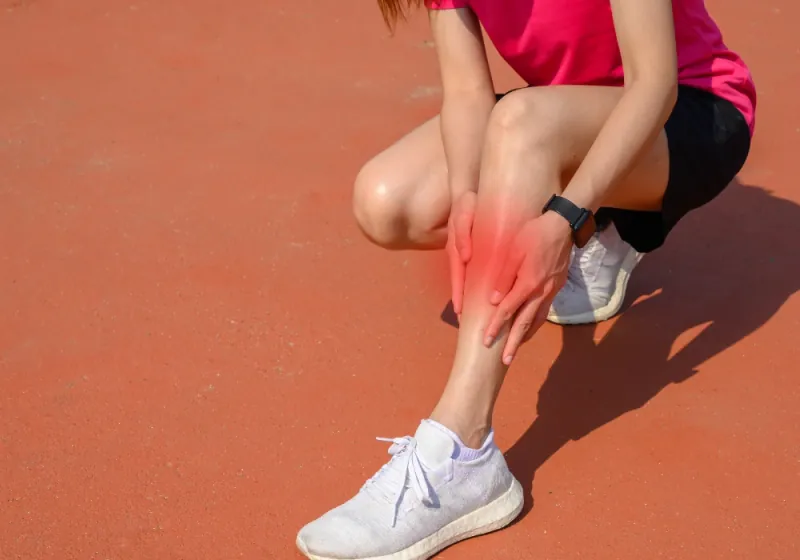
Shin pain can make something as simple as going for a walk uncomfortable. It may start as an ache that only shows up after a longer walk, or it can become painful enough that you begin changing how often or how far you go.
Shin pain often develops when the muscles and tissues in the lower leg are doing more than they are used to. Understanding what is causing the discomfort can help you manage it now and reduce the chances of it returning.
Why Do Your Shins Hurt When You Walk?
Shin pain from walking is often related to overuse or overload rather than one sudden injury. This means the discomfort can build over time when the muscles, bones, and surrounding tissues in the lower leg are dealing with more stress than they are ready for.
A common example is suddenly increasing how much you walk. If you usually go for short walks a few times a week and then begin walking for an hour every day, your lower legs need time to adjust. Even though walking is lower impact than running, every step still places repeated demand on the lower leg.
The Two Main Types of Shin Pain
Shin pain can generally be felt either along the front of the lower leg or along the inner edge of the shinbone.
Pain at the front of the shin
Pain at the front of the shin may involve the tibialis anterior muscle, which helps control foot movement while walking. This type of discomfort can worsen with longer walks or more time on hills.
Pain along the inner shinbone
Pain along the inner of the shinbone is often associated with medial tibial stress syndrome, commonly referred to as shin splints. This type of pain is also usually linked to repeated stress and can develop when walking volume increases faster than the body can adapt.
Although both types can be related to overuse, the location of the pain and the activities that make it worse can help give a better idea of what may be contributing to the problem.
Common Causes in Walkers
One of the most common causes of shin pain is doing too much too quickly. A sudden increase in walking distance or frequency can place more stress on the lower legs than they are used to handling. The surface you walk on can also play a role. Concrete and pavement are harder surfaces, so spending a lot of time walking on them may increase the amount of repeated impact your legs have to manage.
Change in grade
Walking uphill and downhill can also make the muscles in the calves and shins work differently, which may contribute to soreness if hills are a new part of your routine. Footwear is another factor to consider. Shoes that are worn out or not supportive enough can affect how your feet and lower legs handle each step. In many situations, there is not one single cause. Shin pain may develop because several smaller factors are happening at once.
How to Relieve Shin Pain From Walking
If your shin pain is mild and has only recently started, temporarily reducing how much stress you place on the area may help. You do not necessarily need to stop walking completely, but shortening your walks or slowing your pace can give the irritated tissues more time to recover. Applying ice to the sore area for about 10 to 15 minutes after walking may also help with temporary discomfort.
Begin with gentle stretching
Gentle stretching of the calves and the muscles along the front of the shin may be helpful if the lower leg feels tight. Stretching should feel comfortable and should not cause sharp or increasing pain. You can also try light self massage around the shin and calf muscles. Using your hands or a foam roller may help with tightness, but avoid pressing aggressively into an area that is especially painful.
Buy better footwear, often
Your footwear is also worth checking. Supportive, cushioned shoes may make walking more comfortable, especially if you spend a lot of time on pavement or concrete. If your shoes are noticeably worn or no longer feel supportive, replacing them may help reduce some of the stress on your lower legs.
Temporary relief: Pain medication
Some people may also use over the counter pain medication for temporary relief. These medications are not appropriate for everyone, so it is best to speak with your doctor or pharmacist if you are unsure whether they are safe for you.
Can You Keep Walking With Shin Pain?
Whether you can continue walking depends on how severe the pain is and how your leg responds during and after activity.
Mild discomfort does not always mean you need to stop walking completely. You may be able to continue with shorter or slower walks while your symptoms settle. Going on a flatter route and avoiding long hills may also make walking more manageable.
If the discomfort becomes stronger the farther you walk or is getting worse from one day to the next, your current walking routine may be too demanding.
You should also avoid pushing through pain that causes you to limp or noticeably change the way you walk. Once your symptoms begin to improve, you can build your walking distance back up rather than immediately returning to your previous routine.
How to Prevent Shin Pain When Walking
Preventing shin pain often starts with making changes to your walking routine gradually. Your footwear should also be checked regularly. Walking shoes can lose cushioning and support over time, even before they look completely worn out. Strengthening the muscles around the calves, shins, ankles, and feet can also help the lower legs manage the repeated demands of walking. Stretching the calves and maintaining comfortable ankle movement can also be useful if tightness tends to develop after walking. Changing your routes may help as well. If every walk includes steep hills or long stretches of hard pavement, alternating with flatter routes can reduce some of the repeated stress while your body builds endurance.
When to See a Physiotherapist
Shin pain may improve after several days of reducing or modifying your walking routine. However, if the pain is not improving after approximately one to two weeks, it may be time to have the area assessed. You should also consider seeing a physiotherapist in Ontario if the pain comes back every time you begin walking again or is present even when you are resting.
The pain is concentrated
Pain that is concentrated in one small area of the shin should also be looked at more closely, as localized pain can sometimes be associated with a stress injury rather than shin splints.
Walking assessment
A physiotherapist can assess how you walk, review your footwear, and look at the strength and flexibility of the muscles in your lower legs. They may also assess how your feet and ankles move to identify anything that could be placing extra stress on the shin. Treatment will depend on what is contributing to the problem. It may include manual therapy, changes to your activity, footwear recommendations, and a tailored exercise program. The goal is to help settle the current pain while also addressing the reason it may be happening in the first place.
Final Thoughts
Shin pain from walking is often related to the lower leg taking on more stress than it is currently prepared to handle. Reducing your walking temporarily, icing the sore area, gently stretching, checking your footwear, and giving your body enough time to recover can all help with mild symptoms.
Once your pain begins to improve, gradually increasing your walking and strengthening the muscles around the lower leg can help reduce the chances of the problem returning.
If your shin pain continues despite making changes at home or keeps returning whenever you walk, the team at Amberlea Physiotherapy & Rehab Clinic can assess what may be contributing to your symptoms and create a treatment plan to help you return to walking more comfortably.
![Tech Neck Humps [How To Fix & Treat]](/images/blog/tech-neck-800w.webp?v=1903e6fb)
![Can you exercise after shockwave therapy? [Answered]](/images/blog/shockwave-therapy-1-800w.webp?v=a088e176)